By Department
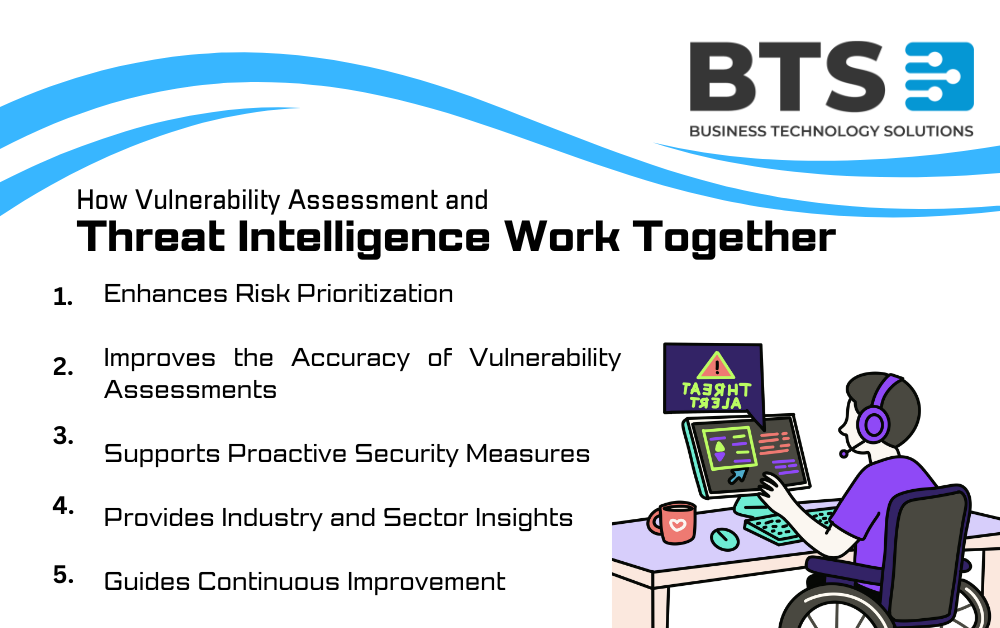
Today, enterprises are confronted with various hazards that may threaten their data, systems, and reputation. Standard vulnerability scanning is no longer enough to maintain a strong defense against attackers who adapt quickly. Organizations need actionable intelligence to identify which vulnerabilities are most dangerous and prioritize their remediation. BTS, a leading IT company, helps businesses leverage threat intelligence to enhance their vulnerability assessments. By combining this intelligence with technical testing, companies gain a clear view of the risks that matter most. This integration moves organizations from reactive responses to proactive cybersecurity strategies.
Enhances Risk Prioritization
Understanding Threat Context
Threat intelligence provides crucial context about which vulnerabilities are actively being exploited in the wild. When integrated into a vulnerability assessment, this data allows security teams to focus on the weaknesses that pose the most immediate danger. It prevents organizations from wasting resources on low-priority issues while ensuring that critical vulnerabilities are addressed first. Prioritizing based on real-world threat activity significantly reduces the likelihood of a successful attack. Organizations that leverage threat intelligence gain a more accurate understanding of where to direct their cybersecurity efforts. This ensures that remediation strategies are both practical and efficient.
Applying Real-World Insights
A vulnerability assessment informed by threat intelligence enables organizations to align remediation efforts with threats that are actually occurring. Instead of treating every vulnerability as equally urgent, IT teams can make decisions based on evidence of active exploits. This real-world insight improves operational efficiency by directing attention to the most pressing issues. It also provides executives with confidence that cybersecurity resources are being used strategically. Companies that incorporate this approach can strengthen their defenses while reducing wasted effort. Over time, this method ensures that vulnerability management remains both relevant and actionable. Schedule a consultation with BTS to enhance your vulnerability assessment strategy.
Driving Focused Remediation
Integrating threat intelligence into a vulnerability assessment streamlines the remediation process. Security teams can apply patches and updates in a calculated manner, focusing on vulnerabilities most likely to be exploited. This targeted approach not only improves protection but also enhances overall operational efficiency. Teams are able to respond faster and more effectively, minimizing the risk of downtime or data breaches. By prioritizing high-risk vulnerabilities, organizations can maximize the value of their cybersecurity investments. Focused remediation ensures that defenses remain strong across critical systems.
Improves the Accuracy of Vulnerability Assessments
Filtering Out Noise
Without threat intelligence, vulnerability assessments often generate long lists of potential risks, many of which may never be exploited. This can overwhelm security teams and reduce the overall effectiveness of remediation efforts. Threat intelligence helps filter out low-priority items, allowing teams to focus on vulnerabilities that represent real danger. Concentrating efforts enhances both efficacy and accuracy in the assessment process. Security teams can spend more time addressing meaningful threats rather than hypothetical ones. The result is a vulnerability assessment that genuinely reflects the organization’s risk landscape.
Aligning Assessment with Actual Threats
Threat intelligence ensures that vulnerability assessments are aligned with the current threat environment. Organizations gain insight into which vulnerabilities attackers are actively targeting and which remain low-risk. This knowledge allows IT teams to make informed decisions and address the most urgent risks first. It also reduces unnecessary patching of low-priority systems, saving time and resources. When assessments reflect real-world threats, organizations are better prepared to defend against potential attacks. This alignment makes security planning more precise and effective over time.
Enhancing Decision-Making
A vulnerability assessment augmented with threat intelligence supports evidence-based decision-making. IT teams can confidently prioritize patches, adjust security configurations, and implement policies that address the highest risk vulnerabilities. This strategy lowers the chances of neglecting key threats or overinvesting in low-risk areas. Leadership teams gain actionable insights that inform strategic planning and resource allocation. By enhancing decision-making, organizations create a more resilient cybersecurity posture. Over time, this approach ensures continuous improvement in threat mitigation. Discover how threat intelligence can improve your organization’s cybersecurity posture—contact BTS today.
Supports Proactive Security Measures
Anticipating Attacks
Threat intelligence provides insight into attacker tactics, techniques, and procedures, enabling organizations to anticipate potential attacks. When applied to vulnerability assessments, this intelligence helps IT teams secure systems before exploits occur. Anticipating threats allows organizations to patch vulnerabilities and adjust defenses proactively, rather than reacting to breaches after they happen. This forward-thinking approach reduces the risk of operational disruption and data loss. Proactive measures also build confidence among stakeholders that cybersecurity is being handled strategically. Organizations that anticipate attacks are better positioned to maintain business continuity. Get a tailored vulnerability assessment with BTS and stay ahead of emerging threats.
Strengthening Cybersecurity Posture
A proactive approach to vulnerability assessment ensures that defenses are not simply reactive to incidents. By applying threat intelligence to assessments, organizations can implement preventative measures, such as enhanced network segmentation, access controls, and patching schedules. This strengthens the overall cybersecurity posture and reduces exposure to evolving threats. Proactive strategies also encourage a culture of continuous improvement and awareness within IT teams. Companies that adopt this approach demonstrate resilience against sophisticated attacks. Overall, proactive vulnerability assessment improves long-term security outcomes.
Enabling Early Intervention
Early intervention is a key advantage of combining threat intelligence with vulnerability assessments. Organizations can identify high-risk areas before an incident occurs and take action to prevent exploitation. This reduces the potential impact of breaches and allows security teams to maintain control over their IT environment. Early intervention also enables faster response times and more effective mitigation strategies. Over time, integrating intelligence into assessments helps maintain an adaptive security framework. Organizations remain ahead of attackers rather than responding after a compromise.
Provides Industry and Sector Insights
Tailoring Security to Your Industry
Threat intelligence often includes insights specific to industries or sectors, highlighting attack trends most relevant to particular businesses. Incorporating this information into a vulnerability assessment allows organizations to focus on risks that are most likely to affect their operations. This tailored approach makes assessments more precise and security measures more effective. Companies gain insight into how industry-specific threats could impact their systems. Tailored assessments improve both planning and mitigation strategies. Security becomes more targeted and aligned with real-world risks.
Understanding Sector-Specific Threats
Different industries face unique threat landscapes. Healthcare, finance, and retail, for example, each encounter distinct vulnerabilities and regulatory challenges. A vulnerability assessment informed by sector-specific threat intelligence ensures that these nuances are considered. Organizations can implement controls that address both industry trends and compliance requirements. This approach reduces exposure to attacks that target sector-specific weaknesses. It also enhances organizational resilience by preparing for likely threats in the industry. Learn how proactive vulnerability assessment can reduce risk exposure and strengthen your IT defenses.
Enhancing Strategic Planning
Using threat intelligence in vulnerability assessments improves long-term strategic planning. Organizations can anticipate emerging threats, allocate resources more efficiently, and implement policies that address both current and future risks. This forward-looking perspective ensures that cybersecurity investments deliver maximum value. Security teams can adapt their defenses as the threat landscape evolves. Strategic planning informed by intelligence also builds confidence among executives and stakeholders. Over time, it supports sustainable and resilient cybersecurity practices.
Guides Continuous Improvement
Monitoring Emerging Threats
Combining threat intelligence with vulnerability assessments supports an ongoing cycle of security improvement. Organizations can continuously track new vulnerabilities and assess emerging threats. This dynamic approach ensures that risk priorities remain up to date and defenses are adjusted accordingly. Continuous monitoring allows IT teams to address evolving challenges proactively. Over time, this helps maintain a strong and adaptive cybersecurity posture. It ensures organizations are not caught off guard by new attack vectors.
Refining Security Controls
Continuous vulnerability assessment informed by threat intelligence allows organizations to refine security controls over time. Teams can evaluate the effectiveness of patches, adjust configurations, and implement stronger safeguards. This iterative process ensures that security measures evolve with the threat landscape. Regular updates and improvements reduce exposure to both known and emerging vulnerabilities. Organizations benefit from a continuously strengthened defense framework. Refinement enhances resilience across all critical systems.
Maintaining Organizational Resilience
An ongoing cycle of intelligence-informed vulnerability assessments ensures organizational resilience. Businesses can proactively address threats, improve defenses, and maintain operational continuity. By evolving alongside the threat landscape, organizations reduce the likelihood of successful attacks. A resilient posture also improves stakeholder confidence and supports compliance with regulatory standards. Over time, this approach ensures sustained protection across all systems. It transforms vulnerability assessment from a reactive process into a strategic advantage. Protect your organization before threats strike—schedule a comprehensive vulnerability assessment with BTS today.
Conclusion
Incorporating threat intelligence is fundamental to practical vulnerability assessments, enhancing risk prioritization, improving accuracy, supporting proactive security, providing industry-specific insights, and guiding continuous improvement. Organizations that integrate intelligence into their assessments gain a realistic understanding of threats and can allocate resources more effectively. At BTS, we help businesses leverage threat intelligence to strengthen vulnerability assessments and ensure real-world protection against evolving cyber threats. Proactive, intelligence-driven vulnerability assessments enable companies to stay ahead of attackers and maintain resilient defenses.
Contact BTS today to learn how our vulnerability assessment services can safeguard your organization and improve your cybersecurity strategy.