By Department
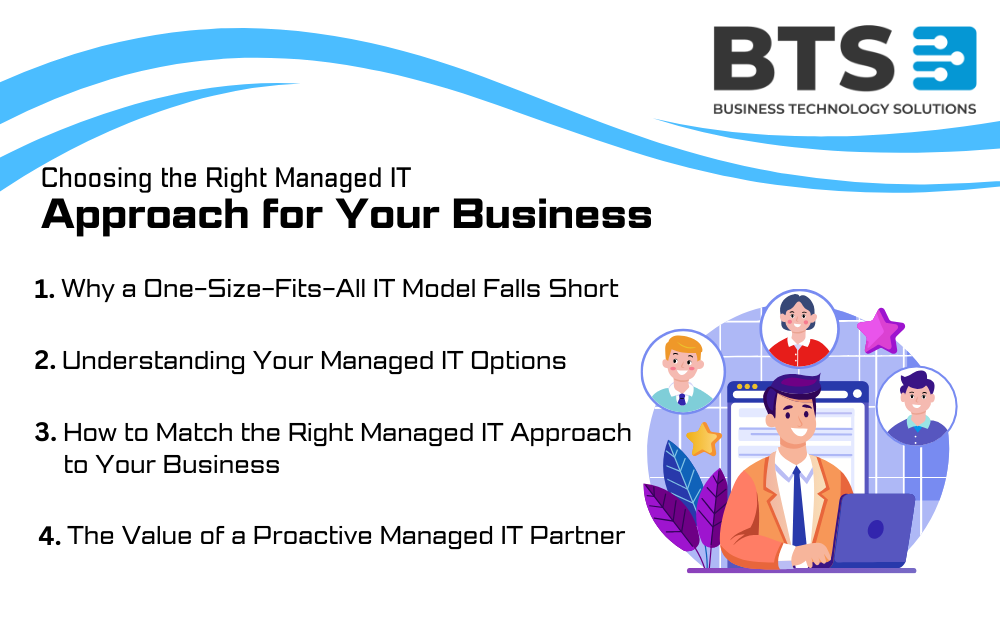
Technology is essential to how your business operates, but managing it internally can quickly become overwhelming as systems grow, security risks increase, and downtime becomes more costly. Many organizations turn to managed IT when they reach a point where reactive fixes and limited visibility are no longer sustainable.
The challenge is that not every managed IT approach delivers the same level of support or strategic value. Choosing the right model matters because it impacts reliability, security, and long-term growth. Understanding your options helps ensure your technology supports the business instead of creating new obstacles.
Why a One-Size-Fits-All IT Model Falls Short
Many businesses start with an IT setup that evolves over time rather than one that is intentionally designed. As new tools are added and problems are handled as they arise, technology becomes harder to manage and less aligned with how the business actually operates. This reactive approach often works early on, but it rarely scales well.
Common Issues With Reactive or Fragmented IT Support
When IT support is handled on an as-needed basis or spread across multiple vendors, problems tend to surface at the worst possible times. Instead of preventing issues, the focus stays on fixing what is already broken.
- Downtime disrupts productivity and pulls staff away from their work.
- Security risks can go unnoticed until a serious incident occurs.
- IT costs become unpredictable and difficult to budget.
When Your IT Model No Longer Fits the Business
As your business grows, technology needs change. What once felt manageable can quickly become a limitation.
- Expansion increases the number of users, devices, and access points.
- Remote or hybrid work introduces new security and support challenges.
- Decisions become reactive instead of part of a long-term plan.
At this stage, reassessing your approach to managed IT helps bring structure, visibility, and stability back into your technology environment.
Understanding Your Managed IT Options
When businesses begin evaluating managed IT, one of the first challenges is terminology. The phrase is often used broadly, even though service models can differ significantly in scope, responsibility, and value. Without a clear understanding of these options, it becomes difficult to choose an approach that truly supports your business.
Break/Fix vs. Ongoing Managed IT Support
Break/fix support focuses on resolving issues only after something goes wrong. While it may appear cost-effective upfront, it often leads to recurring disruptions and unpredictable expenses. Ongoing managed IT takes a different approach by monitoring systems, addressing issues early, and keeping technology aligned with daily operations.
- Break/fix responds to problems after they impact productivity.
- Managed IT emphasizes prevention, consistency, and visibility.
Co-Managed vs. Fully Managed IT Services
Some organizations have internal IT staff but need additional expertise or coverage. Co-managed IT allows your internal team to share responsibilities with an external provider. Fully managed IT places day-to-day management, monitoring, and strategic planning in the hands of a dedicated partner.
- Co-managed IT supports internal teams without replacing them
- Fully managed IT provides comprehensive oversight and accountability.
Understanding these models helps you move beyond labels and focus on what level of support makes the most sense for your business.
How to Match the Right Managed IT Approach to Your Business
Choosing a managed IT solution is less about finding the most features and more about aligning support with how your business operates today and where it is headed. When services are selected based on price alone, important gaps in security, scalability, or planning often appear later.
Business Factors That Should Guide Your Decision
Every organization has different priorities and risk levels. Evaluating these factors helps narrow down the managed IT approach that fits best.
- Number of users, devices, and locations
- Industry regulations or data protection requirements
- Current level of in-house IT expertise
Planning for Growth, Security, and Scalability
Your IT strategy should support long-term goals, not just immediate needs. As your business grows, technology must remain reliable and secure without becoming a bottleneck.
- Supporting remote and hybrid workforces
- Preparing for new applications or system expansions
- Reducing risk as infrastructure becomes more complex
When managed IT is aligned with business objectives, technology becomes an enabler rather than a source of ongoing concern.
The Value of a Proactive Managed IT Partner
As technology continues to evolve, keeping systems secure, updated, and reliable becomes a full-time responsibility. For many businesses, internal teams are focused on day-to-day operations and do not have the bandwidth to monitor infrastructure, anticipate issues, and plan strategically at the same time. This is where a proactive managed IT partner adds measurable value.
What Proactive Managed IT Looks Like in Practice
As technology continues to evolve, keeping systems secure, updated, and reliable becomes a full-time responsibility. For many businesses, internal teams are focused on day-to-day operations and do not have the bandwidth to actively monitor infrastructure, manage cybersecurity risks, and plan strategically at the same time. This is where a proactive Managed IT partner adds measurable value.
What Proactive Managed IT Looks Like in Practice
Rather than waiting for problems to interrupt your business, proactive Managed IT focuses on prevention, consistency, and security.
- Continuous system monitoring to catch issues early
- Routine updates and patching to reduce vulnerabilities
- Ongoing cybersecurity oversight to protect data, users, and access points
This approach reduces downtime and helps your business operate with fewer disruptions.
Why Experience and Strategy Matter
Technology decisions should support your business goals, not add unnecessary complexity. An experienced managed IT partner provides more than technical support by offering strategic guidance that aligns systems, security, and planning with how your business actually operates. This level of insight helps reduce surprise costs, improve long-term reliability, and ensures technology evolves alongside your organization rather than holding it back.
Providers like BTS Solutions work alongside businesses to ensure managed IT supports growth, security, and operational stability without unnecessary complexity.
Building a Managed IT Strategy That Supports Your Business
Choosing the right managed IT approach is about more than outsourcing support. It is about building a technology strategy that reduces risk, improves reliability, and supports how your business operates today and in the future. When IT is aligned with your goals, it becomes a foundation for productivity and growth rather than a source of ongoing disruption.
If your business is looking to move away from reactive support and toward a more strategic approach to managed IT, contact BTS Solutions to learn how the right level of guidance, monitoring, and planning can help your organization operate with confidence.